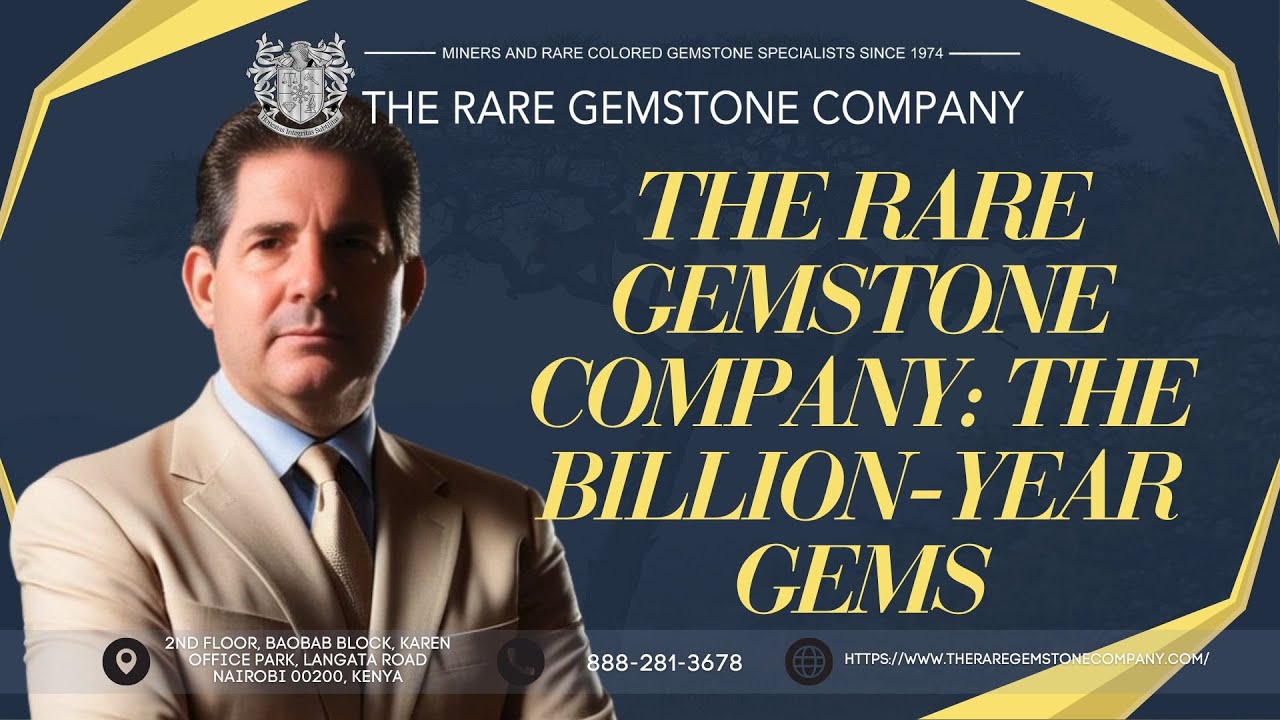
In a captivating episode of Local Leader TV, Antony Zagoritis, CEO of the Rare Gemstone Company, shared his deep knowledge and passion for the world of colored gems. From his firm’s humble beginnings to its role as a global leader in fine gemstones, Zagoritis offered rare insight into the artistry, ethics, and economics that define the modern gemstone industry.
From Coffee Fields to Gem Markets
The Rare Gemstone Company traces its origins back to 1974, when Antony’s father—originally a coffee farmer—ventured into the gemstone trade. Antony joined the family business in 1998, bringing with him a strong foundation in business and gemology. Over time, he led the company to focus exclusively on the top 1% of all gemstones, redefining its identity as a curator of the world’s rarest and most valuable gems.
Initially, the company specialized in exporting rough colored stones to Germany. But as Antony observed the market evolve, he made a pivotal decision: to move up the value chain. Today, the Rare Gemstone Company is known for its fine jewelry, bespoke design, and ethically sourced gemstones that meet the highest standards of quality and transparency.
Technology and Customization in Modern Jewelry Design
Under Antony’s leadership, the company integrated 3D printing and CAD design into its production process. Through a build-your-own jewelry platform, customers can now personalize every aspect of their jewelry—from gemstone choice to setting design. This innovation bridges traditional craftsmanship with cutting-edge technology, empowering clients to become part of the creative process.
While the company operates within the top 1% of the gem market, lower-grade stones are distributed through networks in Bangkok and India, ensuring that every gem finds its appropriate market.
The Investment Value of Colored Gems
Zagoritis emphasized that gems are a historic store of value, maintaining stability even during inflationary periods. Rare stones like Alexandrite and Paraiba Tourmaline have soared in value, sometimes reaching $30,000 to $40,000 per carat. Similarly, fine untreated rubies can fetch hundreds of thousands per carat, making them among the most sought-after natural treasures on Earth.
As lab-grown diamonds have disrupted the diamond industry, Antony observed a shift in consumer preference toward colored gems, particularly for engagement rings and high-end jewelry. Consumers, he explained, are seeking uniqueness and authenticity—qualities that lab-created stones cannot replicate.
Rarity, Value, and the Beauty of Nature
While beauty often draws initial attention, Antony clarified that rarity and value are determined by demand and scarcity, not aesthetics alone. For instance, Amethyst, despite its striking color, is abundant and therefore inexpensive. In contrast, Tanzanite, found only in one small region of Tanzania, is considered a “one-generation gem,” with its finite supply adding to its mystique and investment potential.
Blockchain and Ethical Sourcing
A particularly groundbreaking development in the company’s approach is its blockchain tracking system for gemstone provenance. This tool allows artisanal miners—who account for most colored gem production—to document the origin and journey of each stone with photographs and timestamps. This transparency fosters ethical sourcing and combats the longstanding challenges of exploitation and environmental harm in the industry.
In the coming year, the company plans to film videos at every mine featured on their platform, giving buyers an intimate look at where and how their gemstones are unearthed.
The Science and Soul of Tsavorite, and Tanzanite
Among the gems discussed, Tsavorite, and Tanzanite stand out as symbols of East Africa’s mineral wealth. Tanzanite, discovered in the late 1960s after a Tanzanian bushfire, is uniquely colored by vanadium, while Tsavorite,—its “sister stone”—owes its vivid green hue to vanadium and chromium. Tsavorite,, Zagoritis explained, is rarer than Tanzanite, particularly in sizes over two carats, and is prized for its brilliance and durability.
A flawless nine-carat Tsavorite, can command prices around $800–$900 per carat, while exceptional Tanzanite continues to intrigue collectors worldwide. Both gems are over a billion years old, connecting wearers to the ancient geological forces that created them.
Marketing and the Future of the Gem Industry
Zagoritis acknowledged that marketing plays a vital role in shaping gemstone demand. Campaigns for Tanzanite in the early 2000s fueled its rise, while lesser-known gems like Tsavorite and Dragon Garnet await similar exposure. He also raised concerns about overmining and sustainability, urging greater responsibility among miners, traders, and consumers.
As the Rare Gemstone Company prepares for a year-long television feature across the U.S., Antony remains focused on promoting ethical, authentic, and emotionally resonant jewelry. For him, every gemstone tells a story—a billion years in the making—transformed by human artistry into something truly timeless.
CONTACT ANTONY:
The Rare Gemstone Company
2nd Floor, Baobab Block, Karen Office Park, Langata Road
Nairobi 00200, Kenya
888-281-3678
Online at: The Rare Gemstone Company